Why I Ditched Roam Research and Logseq as Tools for Writing
Roam Research blew my mind. Logseq gave me back control. But when deadlines arrived, both hit the same wall: copy-paste was the only way out. A thinker's paradise — and a writer's nightmare.

Update, December 2025: Four years after writing this, I've gone deeper into the question. The problem wasn't just output — it was something more fundamental about how these systems capture our attention. The elaborate architectures we build to organise thinking can become the thinking itself.
Read the follow-up: Ship the Book, Not the System
Skyrocketing productivity thanks to Roam Research
Truth is: I was blown away when I first discovered Roam Research, and the infinite possibilities opening up through linking my notes, even the paragraphs became units of thoughts, of imagination. My productivity skyrocketed, there was not one idea which was not jotted down, [[bracketed]], interlinked with others. Webs of ideas formed, forgotten thoughts came back to surface because linked by the system to newer ones.
An important point of the revolution was that texts and notes did not exist as files any more, they just existed, like the photographs on Instagram just exist or the tweets on Twitter, without having a physical location being bound to. They are not retrievable through a path, nobody has the slightest idea where the pictures and tweets and comments are stored — they just are. This, I imagine, will be the future of computing. For me, not bothering about files and their locations any more, was a revelation. It all started to be just about the thought itself, not its physical place.
A thinker's paradise was growing in Roam — and a writer's nightmare.
The discomfort of the cloud
After about a year in Roam, I started feeling uncomfortable. All my notes, including family records, project ideas and stories were living in a non-place, on disks I had no idea where they might be spinning, somewhere in a distance of thousands of kilometres of cables and behind tens or hundreds of routers and switches and firewalls.
I realised it was fundamental to get my writing, which is my personal life, my thinking and my working, out of the internet and back into my own hands. The thoughts behind this were not only related to a possible breakdown of the company (i.e. Roam Research) or of the company they were hosting the data with.
The main point was thinking of the potential unreliability of my credit card: what if, for one reason or the other the CC connected to their account expired or got blocked, and for some reason (travelling, illness, whatever might come) I was unable to unblock it in a reasonable amount of time: Roam Research might just interrupt their service, my notes being lost, or being unavailable to be accessed, or, the smallest of risks, I might not be able to continue working.
Not. An. Option.
Enter Logseq
In Logseq, an open source (!) software in big part mimicking the look and feel of Roam Research and in many parts surpassing it, all files are living on my computer. They are markdown, that is: text files, available and readable for the foreseeable future. Not only they are not shared and vulnerable to risk by third parties, but I do own them, I can create backups, I control them.
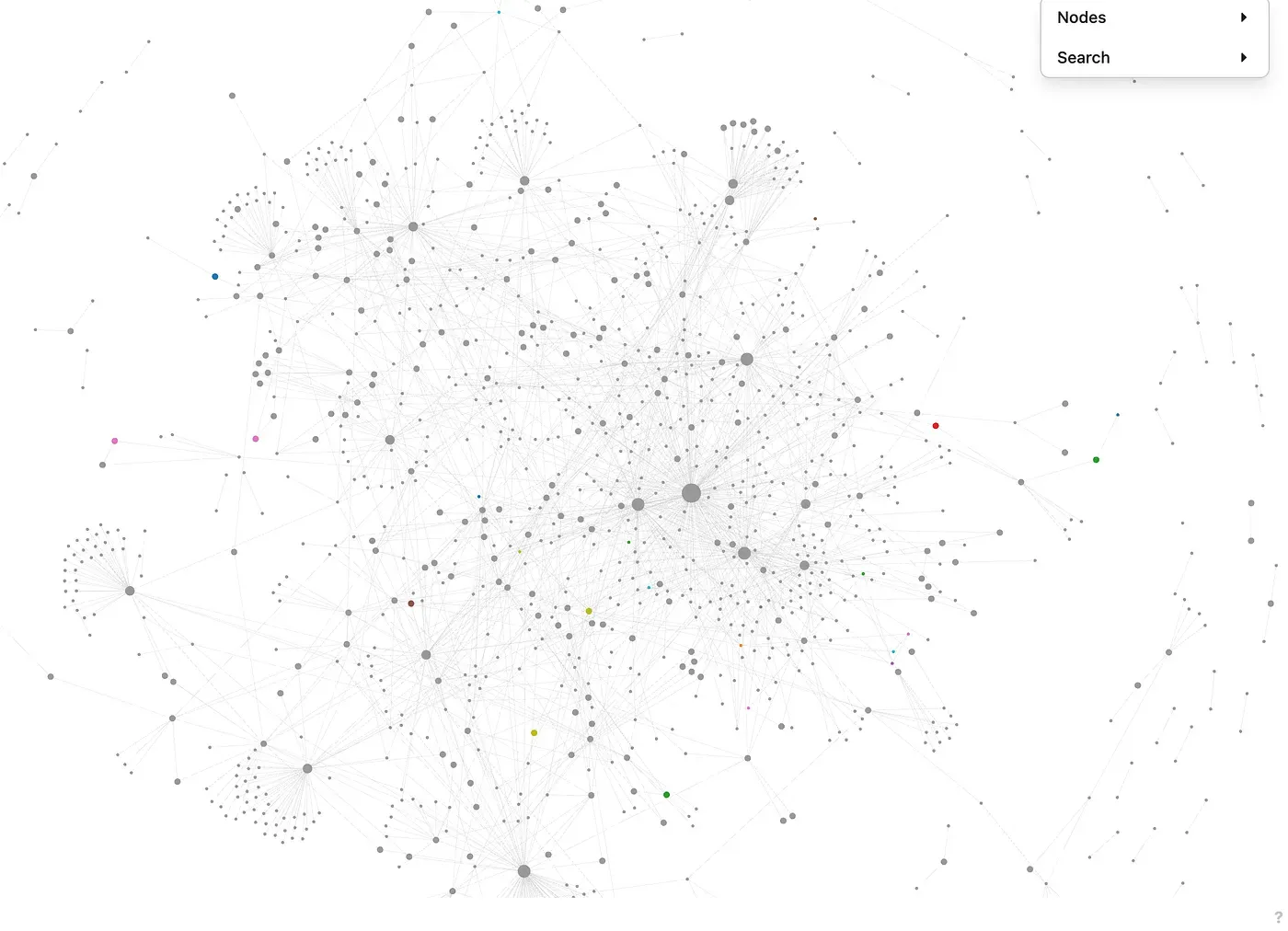
Incredible and very helpful community
Migrating the whole graph from Roam Research to Logseq was a snap, thanks to a wonderful Logseq community. There are many very useful articles about the migration process and about any question connected to Logseq, to be found in their forum and on Discord. An incredible community sharing workflows, implementation of queries and all the tips and tricks connected to the software which is still in beta.
I restarted note-taking, and all the linking and back linking, all the outlining and connecting thoughts again boosted my productivity. If it is not in Logseq, it did not happen, as a fellow in the Discord community stated.
Discovering copy/paste as an output method
But, and here comes my headache: as a person living through writing, I also need to deliver: I need to compile texts for theatre plays, deliver articles, compose (fiction) stories or long-form fiction texts. Of course, nobody would expect that any note-taking or outlining tool should output correctly formatted results for various scenarios.
But: At this point 1) any output from Logseq needs to be done by copy/paste — which throws me back into the exciting mood when I discovered the use of the mouse with my first Macintosh Classic thirty years ago, and 2) there seems to be no realistic possibility to compile the linked notes and pages into one linear document.
The linking dream
Let's say I need to deliver an article "Why atheists should be militant". I would create a page titled Militant_Atheists. The power of Logseq (and Roam etc) is that I am able to write on today's page in the journal, tag the paragraph with #Militant_Atheists, and it will show up as a linked reference on the page Militant_Atheists.
This is fantastic, really, as I can do so on any page: Let's say I am taking notes on a talk by Christopher Hitchens, and it might inspire me for more arguments for ideas about Why atheists should be militant: I could just write them down in a new paragraph on the Hitchens note-taking page, tag them with #Militant_Atheists (and with any other tags I wish), and again this paragraph will show up as a linked reference on my Militant_Atheists page (and on the other pages I linked to through tagging).
WONDERFUL!
Hitting the wall
Now, the deadline approaches, and I need to deliver the text. I go to my Militant_Atheists page to compile the material created in the past two weeks, but at this point, technically I am stuck: the only way to get my texts into a shape for refining it for the final output would be to copy any given paragraph and paste it into a text editor such as Word, Ulysses, Scrivener, Pages, etc.
I might not know many things, but I do know that I don't want to do THAT. All the beauty of the interlinked writing and thinking process hits the wall, at this point.
I can see why, at this state of the software, this might not yet be possible to be implemented: what I really would need to be able to do is 1) compile the notes on the page including the linked references and, even better, 2) prior to the compiling being able to elaborate and rearrange the order of the linked references.
I am sure this will come: Logseq is growing with an amazing speed, supported by a very open, qualified and helpful community. Until then, I will need to take the bite from the sour apple, as the Germans say, and for the actual writing fire up good old Scrivener.
Read the follow-up: Ship the Book, Not the System
Questions?
What is Roam Research?
Roam Research is a networked note-taking application that uses bidirectional linking. Notes and even individual paragraphs can be linked together, creating a web of interconnected thoughts. It popularised the concept of the "second brain" and influenced many similar tools.
Why did you leave Roam Research?
Two reasons: First, all data lives in the cloud on servers I don't control. Second, my access depends on a credit card — if the payment fails for any reason (travel, illness, blocked card), I could lose access to years of notes. For a writer, that's not acceptable.
Is Logseq better than Roam Research?
For data ownership, yes. Logseq stores everything as plain markdown files on your computer. You own your data, can create backups, and don't depend on a subscription. But for output — actually delivering finished texts — Logseq has the same fundamental limitation.
What's the main problem with most Zettelkasten apps for writers?
The only way to get your interconnected notes into a finished document is copy-paste. You cannot compile linked references into a linear text. All the beautiful web of ideas hits a wall when the deadline arrives.
What do you use now (2026) instead?
Plain text files (.txt and .md). And DEVONthink. It automatically finds connections between documents using local AI — no manual linking required. And it lets me focus on writing instead of maintaining elaborate architectures. Read the follow-up: /ship-the-book-not-the-system/.