Change of Sign: Cast for Mars
An immersive experience by Alter Agent at Fiera di Treviglio. On a single dramaturgical decision that makes the difference between watching and experiencing.
I board at Treviglio. The half-empty, harshly lit regional train, coming from Verona, cuts deliberately through Milan's hinterland. Dark city silhouettes. Industrial zones in the twilight, landscape that looks as if it has given up getting dressed, now letting itself be gawked at in its full nakedness by passing souls.
You go because someone who matters to you is on stage, and now you ride back, your skull full of impressions housed in a blunt emptiness.
Cast for Mars is an immersive experience created by Alter Agent, the creative production studio of Francesco Fiore and Mariano Leotta. Both formerly at Moment Factory, they now commute between Milan and Tokyo. The premise of the piece, or is it an exhibition?: visitors enter a training facility for humans who will colonise Mars. Over ninety minutes, a crew of five or six candidates is guided through the challenges of survival on a planet that will do everything in its power to annihilate life. On the other side of the hall, scientific guides explain to visitors water scarcity, lethal radiation caused by the red planet's absent ozone layer, the architecture of spacesuits, water recovery systems, plant cultivation, the production of synthetic food. There is pizza. There is curry. There is schnitzel, all made from synthetic plants.
In geodesic tents, the training crew, that is, the other half of the audience, runs through gamification sequences, stress management exercises, memory tasks parallel to the visitor group. Alarms wail. Systems fail. Artificial intelligences make terrible mistakes, you don't quite understand what is beeping, howling, and flashing, or why. Everything is spectacularly realised: projections, lighting effects, interactive real-time systems, enormous screens. The technical and creative craftsmanship on display here: respect! The finale is impressive in its dimension, its execution, its ambition. A huge screen in this exhibition hall, played in every corner, shows the training group's stress data in real time, water levels of their reserve tanks, approaching sandstorms. Spectacularly designed games. The effort behind the entire enterprise is impressive.
The lights are increasing now, the buildings closing in on the tracks, threateningly. It is 20:44 when the train comes to a halt at Milano Centrale. As I realise I have missed my connection home by a minute, the solution to this show's problem stands suddenly, glass-clear, before my eyes. It is a single, a fundamental dramaturgical decision.
The premise turns one part of the audience into trainees for the Mars mission, the other into visitors. We are observers who, on Earth, watch others prepare for a future Mars mission. We are standing in a training facility. The alarms wail, the systems collapse, the AI fails, but we always know we are safe.
Nothing threatens visitors at a training site.
The distance to the event is infinite.
We observe all of it, and at some point we have simply understood. Every crisis, however loud it may be, however startling, however urgently the performers shape it, lands softly, remains harmless, because the premise itself says in every moment: this is only a training, a preparation for something future, and therefore has nothing to do with the now.
You are watching. You can leave at any time. The door is over there, and it stands open.
Watching is something fundamentally different from experiencing something. When the body knows it is safe, the nervous system relaxes. The mind observes. Assesses. Evaluates. But it commits to nothing. There is no process in which one could participate.
The question that arises is simple, but anything but banal: why the training camp as a starting situation?
It is this one decision, the declaration that this is a training, a preparation, a rehearsal for something that will happen elsewhere, to other people, later, that dissolves all tension. And thereby takes from the audience any reason to remain present.
Why not, instead of training camp and visitors: reality?
Welcome the audience on Mars.
Tell everyone from the first second that they have arrived on the Red Planet. That the journey lies behind them. That there is no way back, as in life. That there is no door to the outside, because outside, death reigns. From this moment on, the game becomes interesting, every alarm becomes a real threat. Every system failure endangers our lives. Every AI error carries weight. Water scarcity becomes my water scarcity. The radiation is above my head, not only in it. The synthetic schnitzel is my dinner, not something that might someday become dinner for other people on another planet.
A change of sign elevates everything by several dimensions. The games become a fight for survival. The guides become lifesavers. The spectacular projections become the thin membrane between the participants and their annihilation. The same content, the same technology, the same talent, the same six- or seven-figure investment, all of it suddenly under real dramaturgical pressure. And an audience that wants to know how it all turns out, instead of longing for a Prosecco after the first fifteen minutes.
Everything exists.
Did I miss the train by one minute's delay? Or did I reach the last one of the evening in perfect calm?
It depends on the question.
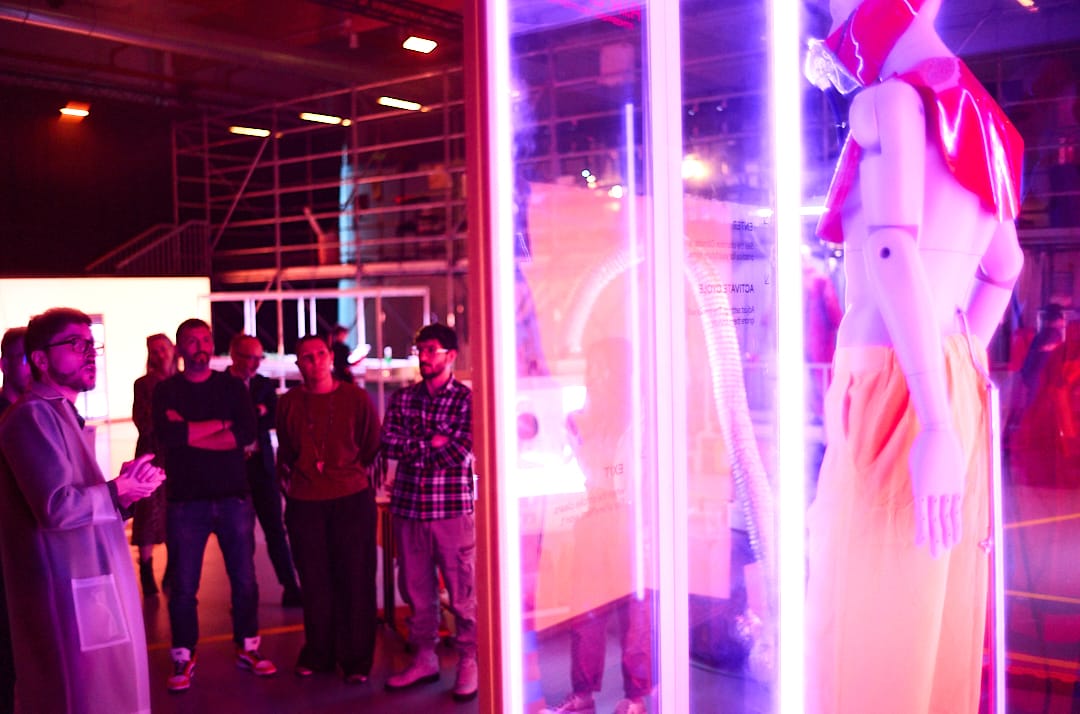
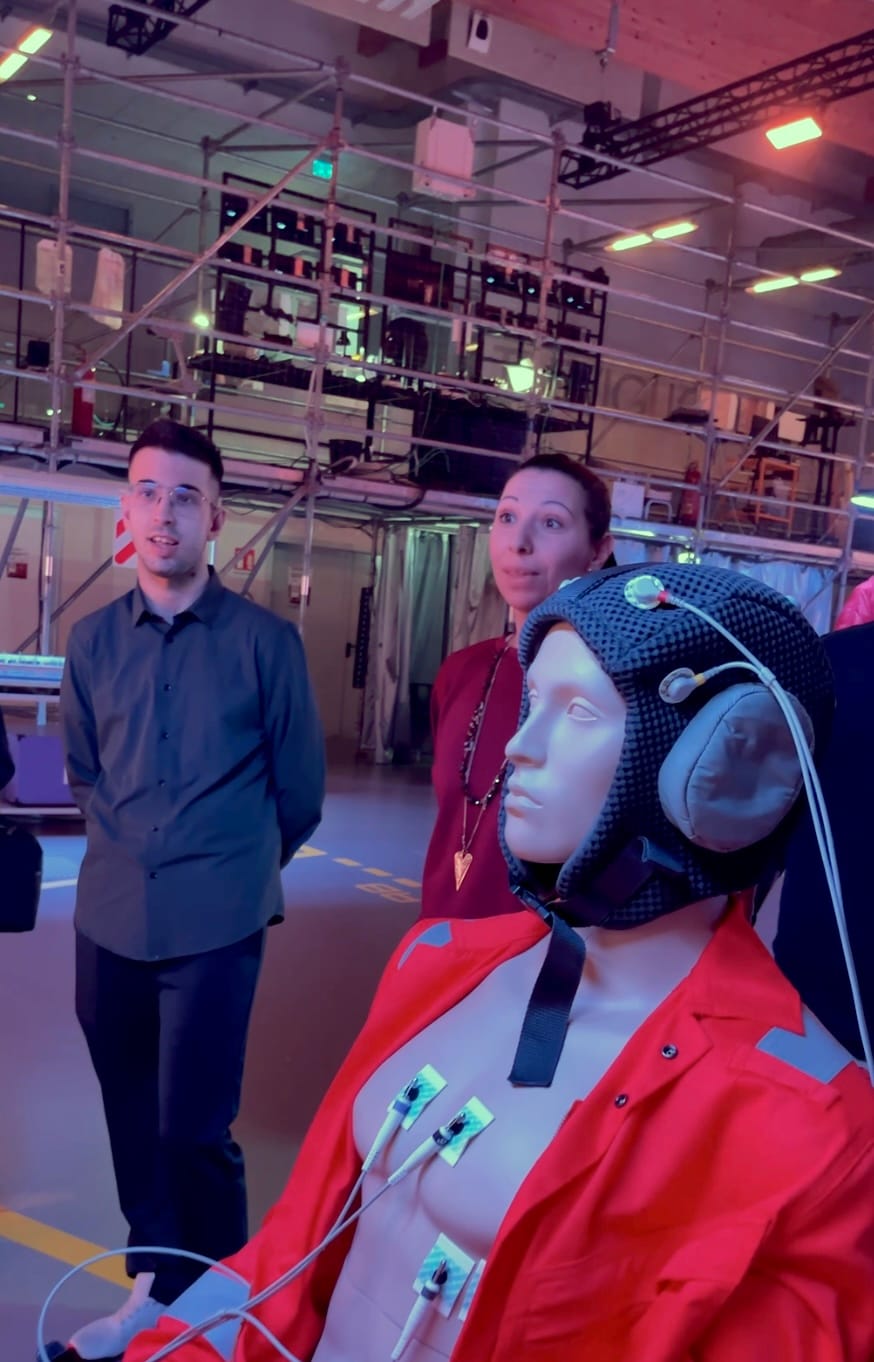
Cast For Mars, Alter Agent, Treviglio, march 2026. Photo: MZ
Until the next letter,
warmly!
Write to me in the meantime, I'd love to hear from you.
Markus
This article was originally written in German and is also available in Italian.
 Markus Zohner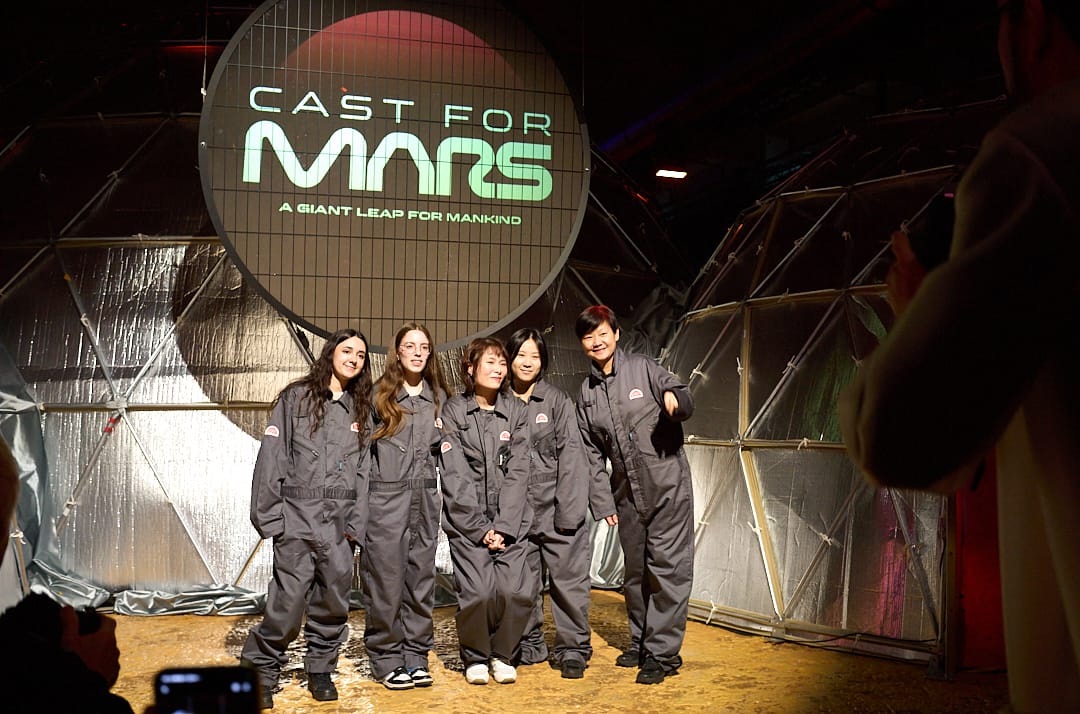
 Markus Zohner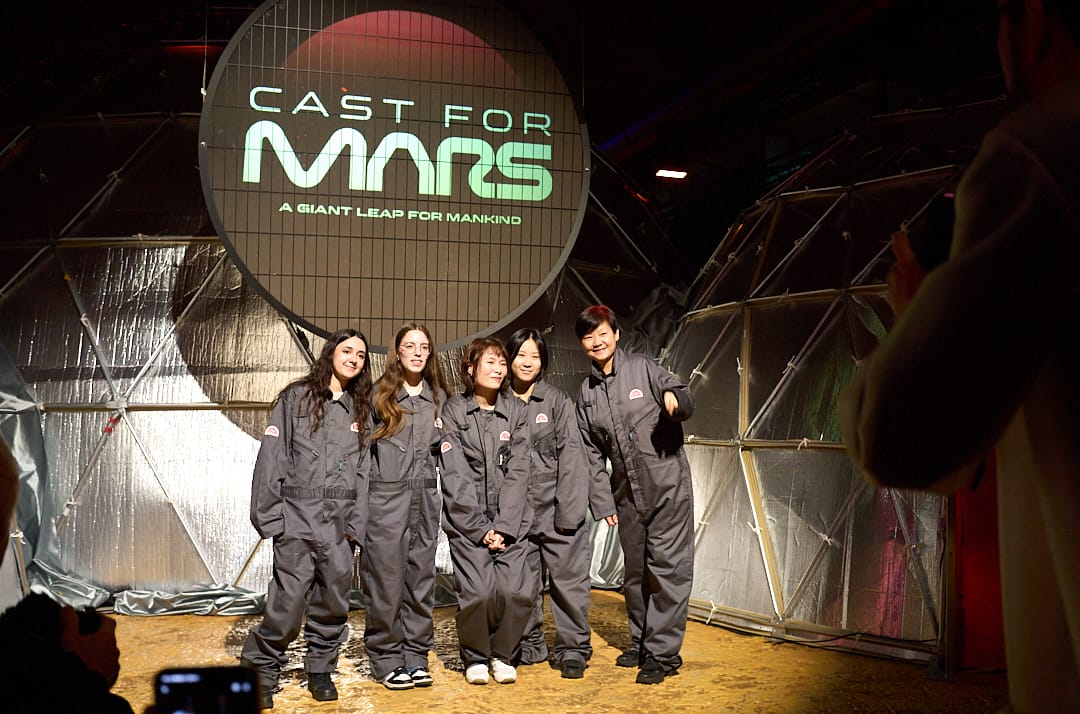
 Markus Zohner

 Markus Zohner